Showing posts with label Deterritory. Show all posts

5/11/11

The art of tracing XI: Constellation of Universes


In Chaosmosis, Felix Guattari tries to grasp how subjectivity is constructed in the fin de millenium-world. Psychoanalysis is not enough and has usurpated much of the concepts which might have been relevant: such as 'the unconscious'. Guattari directs us towards a concept of subjectivity which includes as well environmental as social and psychological dimensions. Subjectivity is defined as:

"The ensemble of conditions which render possible the emergence of individual and/or collective instances as self-referential existential Territories, adjacent, or in a delimiting relation, to an alterity that is itself subjective". (p. 9)

The many 'self-referential existential territories' that traceurs produce could be seen thus: as an almost promiscuous engendering of new events, situations, and singularities.

Conceptual Athleticism I: French soccer experts

Picture the proverbial match between Greek and German philosophers as staged by Monty Python with frog-eating commentators instead, such as Gilles Deleuze, Felix Guattari, and Michel Serres:


First, a rather dense analysis by Deleuze and Guattari (A Thousand Plateaus, p 361-2) in which they couple movement, speed, and "sports" with different conceptions of science, in this case the distinction between a major and a minor science.

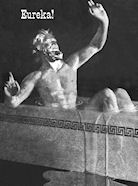
They too, like the original commentator, are surprised by, albeit excited about, the fact that Archimedes plays from the start. Archimedes minor soccer demonstration prior to the game
(0.55-0.59 in the video), in which he nomadologically traces a neverending line of the ball while juggling, is probably what gets them started:

There is a kind of science, or treatment of science, that seems very difficult to classify, whose history is even difficult to follow. What we are referring to are not "technologies" in the usual sense of the term. But neither are they "sciences" in the royal or legal sense established by history. According to a recent book by Michel Serres, both the atomic physics of Democritus and Lucretius and the geometry of Archimedes are marked by it. The characteristics of this kind of eccentric science would seem to be the following:

1. First of all, it uses a hydraulic model, rather than being a theory of solids treating fluids as a special case; ancient atomism is inseparable from flows, and flux is reality itself, or consistency.

2. The model in question is one of becoming and heterogeneity, as opposed to the stable, the eternal, the identical, the constant. It is a "paradox" to make becoming itself a model, and no longer a secondary characteristic, a copy; in the Timaeus, Plato raises this possibility, but only in order to exclude it and conjure it away in the name of royal science. By contrast, in atomism, just such a model of heterogeneity, and of passage or becoming in the heterogeneous, is furnished by the famed declination of the atom. The clinamen, as the minimum angle, has meaning only between a straight line and a curve, the curve and its tangent, and constitutes the original curvature of the movement of the atom. The clinamen is the smallest angle by which an atom deviates from a straight path. It is a passage to the limit, an exhaustion, a paradoxical "exhaustive" model. The same applies to Archimedean geometry, in which the straight line, defined as "the shortest path between two points," is just a way of defining the length of a curve in a predifferential calculus.

3. One no longer goes from the straight line to its parallels, in a lamellar or laminar flow, but from a curvilinear declination to the formation of spirals and vortices on an inclined plane: the greatest slope for the smallest angle. From turba to turbo: in other words, from bands or packs of atoms to the great vortical organizations. The model is a vortical one; it operates in an open space throughout which things-flows are distributed, rather than plotting out a closed space for linear and solid things. It is the difference between a smooth (vectorial, projective, or topological) space and a striated (metric) space: in the first case "space is occupied without being counted," and in the second case "space is counted in order to be occupied."

4. Finally, the model is problematic, rather than theorematic: figures are considered only from the viewpoint of the affections that befall them: sections, ablations, adjunctions, projections. One does not go by specific differences from a genus to its species, or by deduction from a stable essence to the properties deriving from it, but rather from a problem to the accidents that condition and resolve it. This involves all kinds of deformations, transmutations, passages to the limit, operations in which each figure designates an "event" much more than an essence; the square no longer exists independently of a quadrature, the cube of a cubature, the straight line of a rectification. Whereas the theorem belongs to the rational order, the problem is affective and is inseparable from the metamorphoses, generations, and creations within science itself. Despite what Gabriel Marcel may say, the problem is not an "obstacle"; it is the surpassing of the obstacle, a pro-jection, in other words, a war machine. All of this movement is what royal science is striving to limit when it reduces as much as possible the range of the "problem-element" and subordinates it to the "theorem-element."
It bothers Deleuze and Guattari, as much as it bothers Serres, that Socrates gets the last word again (3.00 in the video). Serres (The Parasite, p. 251) mingles into the discussion and states that:

Socrates gets out unscathed. His beautiful individuation is different and evil. Ugly and evil. He runs to take care of his individuation in the gymnasium. To make it flexible, to clean it, to make it effective.

Whereas the other offensive Greeks -- Democritus, Heraclite, and Archimedes -- are atomists (and therefore hydraulic, minor, flux-oriented thinkers), Socrates thinks but of one thing, that is, putting the nail in the coffin. He does so with his head (of course!) and with the German net, two things, that arborescent thinkers have used
to freeze atomistic flux ever since; to stabilize essence in 'statuelike concepts' (Serres, Conversations).

Yes, Deleuze and Guattari continue, the 'apparatus of capture' of Royal Science and State philosophers - always parasiting the benefits of atomism and nomadic war machines!

Mm, Serres (Conversations, p. 105) concurs, 'The mean player imagines himself to be a subject by imagining the ball to be an object – the sign of a bad philosopher'.

After a moment of silence, a time-space filled by the disturbing noise of vuvuzelas, Deleuze and Guattari, who have run out of steam philosophically, angrily rush up from their chairs and ostensively swarm out of the edifice. Serres (
Conversations p. 23), still evaluating the events, finally -- with a smile on his face -- concludes:

I have always been a hellenist.


2/15/11

Holey diver

Holy Diver
You've been down too long in the midnight sea
Oh what's becoming of me - DIO


Hill Taylor stunned the world by breaking the world-record in backstroke 50 m in a minor championship. His performance was also a baptism, in which the name dolphin-man was lent to him.

Dolphin-man is the fastest in the contest, and, with regards to the distance backstroke 50 m, even in the world. But he cannot win, and he knows that. It all depends on his maneuvre of preference, the dolphin-kick. The excellence by which he wields this powerful weapon is the key to his total domination. This move is not essentially illegitimate in backstroke, only so when it emerges in certain proportions. A swimmer must return to air after fifteen metres, lest he's to be disqualified.


Consequently, backstroke 50 m should be named "backstroke more than or equal to 35 to less than or equal to 50 m". Given this, one cannot practically be a record-holder in backstroke 50 m! If you on the one-hand swim using regular backstrokes (think paddle-wheels on steamboats), your opponents will leave you behind as fast as dolphins ward off a shark attack. On the other hand, if you, like the dolphin-man, multiplicate the efficient dolphin-kick, your result is not qualified. That he aggregates a legitimate gesture at least qualifies him as minor athlete.

Practically, no one can be said to hold the world-record in this aquatic event, since what's measured is fuzzy. A fuzziness whose depth dolphin-man delves into. Almost like what D&G hold as the ideal stance in minor science, it is both the "backstrokeness" and "50 metresness" of backstroke 50 m that dolphin-man examines in this race. Albeit in a bigger bathtub, and with an euresqueeeeka, dolphin-man's performance appears as an Archimedean event.


Reading the work of Peter Sloterdijk incites us to ask strange questions. For example, can man become an aquatic being again? Is it possible for a human being to dive into the water not to drown there but to take up with dolphins and mermaids? Are we able to switch elements like this? (...) Sloterdijk's focus on the elements air and water is meant to counteract the age-old philosophical tendency to prioritise earth and fire. (...) It is true, philosophy started with a notorious claim about water. Thales of Miletus (624-545 BC) argued that it was no less than the basic principle (arche) of everything, but subsequent philosophers have done everything to stash away Thales's proposition. How, after all, could one base the world on something fluid? So, philosophy forgot about its own beginnings and became a dry exercise. (...) Almost all anthropology is suffering from a mono-elementary bias. It interprets us as creatures who in the end can only exist in one element, that is to say, on the mainland, in the so-called real. - Rene ten Bos, Towards an amphibious antropology, Environment and Planning D: Society and Space 2009, volume 27, pages 73-86.
The dolphin-man proves to be a fine specimen of the variety of conceptual athletes, by way of which the poet John Keats demonstrates the essence of poetry for his adept-lover Fanny Brawne in the movie Bright Star:
A poem needs understanding through the senses. The point of diving in a lake is not immediately to swim to the shore; it's to be in the lake, to luxuriate in the sensation of water. You do not work the lake out. It is an experience beyond thought. Poetry soothes and emboldens the soul to accept mystery.
Poetry (poeisis) is equivalent with pro-duction (Agamben), invention (Serres), and virtuosity (Virno). Poeisis just happens and is seldom an effect of a planned scheme; contrary to praxis, which contains in itself the goal, the implementation, and the expected outcome of an act. But doesn't dolphin-man, contrary to Keats' poet-swimmer, immediately swim to the other shore? Isn't dolphin-man rather an example of a teleological thinking devoid of all means and process? No. He demonstrates that speed is of the essence, not in order to win, but in order to be able to discern problems just before they gel. To gel is the same as being devoured by that great monstrosity that strives to capture all lines of flight: spectacle. Investigate into fuzziness instead! Dolphin-man will lead us past Leviathan.

During movement, the dolphin-man never leaves the water, which is treason against "the criterion of due humanness in sport".* It's mandatory that the body backstroke-swimmer breaks the surface at least once from underneath. In backstroke man must proof he's a mono-elemental entity by breathing once in a while. Dolphin-man doesn't. Beneath waves events are too furtive to be (made) spectacular.


*This concept will need more unfolding than the initial one, carried out here. "The criterion of due humanness in sport" is a concept that relies on the hypothesis that sport, in order to be sport, must include Latourian-flavoured "trials of humanness". The human factor must be guaranteed and legitimized in sports. When someone runs fast in track and field contests, wind speed must be accounted for in order for the results to be reliable. Testing for doping is legio in contemporary sports. That illegal substances mustn't be found in the athletic body is another example of the criterion of due humanness in sport.

On the one hand, sport is a perfect inversion of the laboratory in which humanness must be quashed, and in which substances are everything. On the other hand, sport is only partly a perfect inversion of the laboratory (at least in Latour's ideal-type of the same): whereas objective measure is celebrated in both laboratories and sports, the former purify nonhumanity from humanness, while the latter purify humanity from nonhumanness.

2/2/11

Boulder rush IV: "A loose boulder"


Contact and contiguity are themselves an active and continuous line of escape. [...] On the one hand, there is a rapid and joyous sliding movement or deterritorialization that makes everything adjacent even at the moment when the dreamer seems to have fallen into an abyss ("The paths there were very winding, ingeniously made and unpractical, but he glided along one of them as if on a rushing stream with unshaken poise and balance"). On the other hand, there are these pathways, these equally rapid segments that bring about deadly reterritorializations of the dreamer [...]. Undoubtedly, this [...] sheds some light in that deadly reterritorialization of K in a hard segment, "a loose boulder".

Deleuze & Guattari, Kafka: Toward a Minor Literature, p. 61.

Bo(u)lder rush III: My, oh My, You need a boulder to cry on!


Nej där fanns ingen lilla My-
det blåste med ett gräsligt gny
det tjöt och drog ur alla vrår
och viftade i mymlans hår
och runt omkring dem, vart man såg,
hemskt stora bummelstenar låg.
De klättrade och kröp bland dem
och Mumintrollet ville hem.
Ack Mymla, sa han, aldrig mer
min mammas hus jag återser!
Fort ut i solskenet igen!
Vad tror du att det hände sen?


In The Book of Moomin, Mymble and little My, the two first desperately try to find the third. Just before My decides that she now might be found, the anguished Moomin and Mymble stumbles through a cave populated by humongous boulders. The wind howls hideously (det blåste med ett gräsligt gny), like it often does in passages and upon thresholds (when doors are opened), and the two are anxious to get out as fast as possible. The briefness of the visit to the realm of becoming is justified by the claim that "No, little My was not to be found there" (Nej där fanns ingen lilla My). She there, she there...

Could one not be found(ed) -- exist -- in becoming? A little forced lost in translation -- anti-etymology, ie philosophical lifestyle athleticism (such as surfing) -- might come in handy here.

Boulder comes from the Scandinavian word Buller (Bummel in the verse above) which means noise. Noise, in turn, is a central sense of the word parasite, which acts as exciter and catalyst in relations. Noise is the transductive area, which becomings inhabit - where the wild things are.
Let the shuttle weave back to Swedish, and we'll find that the word for noise is (o)väsen, which also mean entity! One could be found(ed) in becoming! QED! Yes we can!

Therefore:

Being is becoming. Be(com)ing. Essences, substances, definitions are but snapshots and freeze-frames of constant flux. Whatever is of the essence is off the essence, or, rather, the essence of being is becoming. To exist is etymologically derived from standing or coming forth, to get out of a standing position, or of a place.

Running on boulders is awesome! Becoming rulz! Deterritory FTW!!!!